The Melfort
Museum
Settler’s Village
features
26 buildings
with original
artifacts.
Tour
during our
summer
season
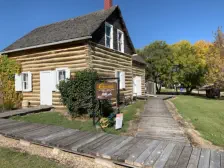
The Bennett House became one of the initial steps toward a permanent
museum, in the town of Melfort, when it was donated by Jim Bennett of
Pathlow, Saskatchewan, in 1973. Today, the downstairs flooring, the main
staircase and several of the interior walls are from the original home,
while the upstairs flooring and log walls have all been replaced. The
exterior log walls, which were squared at the time of the house's initial
construction, were assembled with timber obtained from the land of Dr.
Christianson of Love, Saskatchewan, nephew of Emma
Whittome.
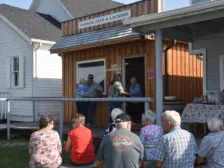
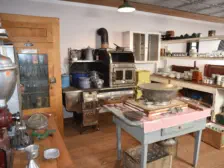
The Canada Cafe and Laundry - This building was built in 2020.
Most towns in the area have had at least one Chinese Cafe and Laundry in
the town.
The Canada Café was situated on main street of Melfort 1921-1922 owner
was Charlie Lee. In 1947-1968 the café was operated by Art Mah. In 1968
Cheung Wing took over management.
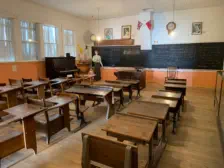
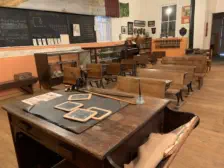
The Rothwell School - The Rothwell School District, situated on the 44 Trail
approximately one mile east of Clemens the school was initially known as
South Melfort School District and was formed in May of 1894. At the
formation, the chairman was Benjamin Rothwell and the secretary treasurer
was Reginald Beatty. The Rothwell school, over 120 years old, was moved to
the museum in 1975. The School’s Flagpole,
located on N.E. corner of school, was originally from the new Clapton School
(1930).
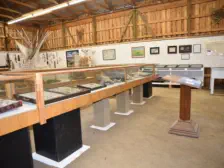
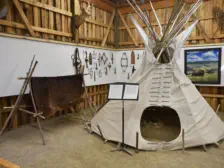
“The Indigenous Peoples and Archaeology Building Exhibit”
AWARD OF MERIT FOR 2021
We acknowledge that we are situated on Treaty 6 territory, the traditional lands of the
Cree, Saulteaux, Dene, and Nakota peoples and the homeland of the Metis. The
building is relatively new and contains many exhibits of Indigenous peoples.
We honour and pay our respects to the Elders - past, present and future- who carry
forward the rich memories, traditions, cultures, and aspirations of Indigenous Peoples.
We are committed to fostering mutual respect and understanding.
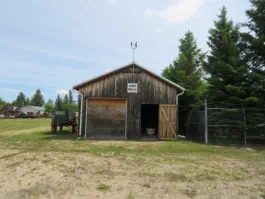
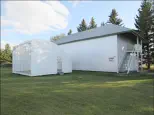
The Village Sawmill
In 1987, Fred Shawaga of Weekes, Sask. donated to our museum a
working sawmill, along with many other smaller items (all 2001-005 items)
that were a part of the lumbering industry many years ago. The museum
built a shed to house the equipment, along with other similar items, and
set it up to be used. Demonstrations have been given periodically,
especially during Fair week.
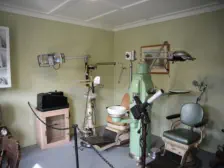
The Dentists Office
The dentistry equipment displayed belonged to Melfort and area
dentists, including among them Dr. Campion Swartout, Melfort's
first female dentist. Dr. Campion Swartout’s maiden name was Helen
Campion Klasen. She was born in Prince Albert, Saskatchewan and
attended Post-Secondary at the University of Toronto, graduating in 1947.
Dr. Campion married Dr. D.B. Swartout, a physician at the Lady Minto
Hospital in Melfort. During a time where the medical arts were
typically still a “man’s profession,” and women had the role of
staying home and raising the children, Dr. Campion efforts were
incredibly significant.
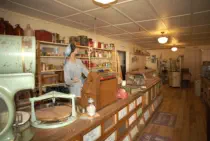
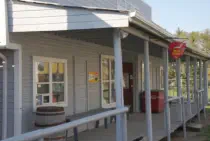
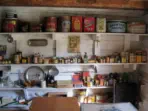
The Pioneer General Store
The general store is not an original building. It was constructed of old
lumber obtained from area buildings. The foundation was poured in 1992
and the structure was completed in 1996. It is not intended to resemble
any one business, but aims instead to recreate the atmosphere prevalent
in rural communities during the period between the late teens and late
1940’s
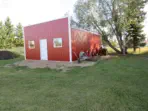
The Hardware Building
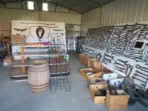
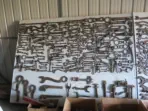
The Hardware Building was constructed in 2018. In 2020 was developed
with a sample of the Museum's considerable tool collection. It focuses on
carpentry tools, automotive tools, and tools used for farming purposes.
Ron Jellicoe contributed a large collection of tools in 1992, providing the
museum with a number of diverse artifacts. Many of the tools displayed
could still perform their intended tasks today and, in many cases, modern
designs vary little from their predecessors.
The Fire Hall
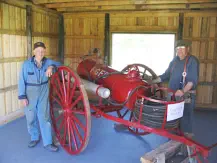
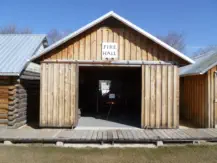
The Fire Hall building is not an original building and was built on museum
grounds. Its purpose is to display a variety of coal and wood burning stoves,
kerosene stoves and heaters and gas stoves. As well, there are photos from
the Broadway School fire and many artifacts.
The Milk house
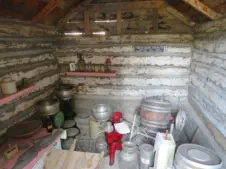
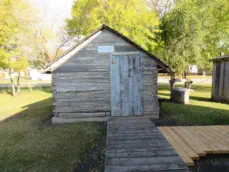
Originally part of the Bennett farmstead, the Milk House was moved to
the Museum grounds in 1973 - at the same time as the other Bennett
structures. The logs of the Milk House remain those originally cut by hand
and hauled during the winter months to the farmstead. They were
squared off by members of the Bennett family using a broad axe; unlike
those of the house, they have been only reassembled onsite, not
replaced. Milk houses were built into the ground in order to maintain
coolness for the foods stored within and could be found on both farm
and town home-sites.
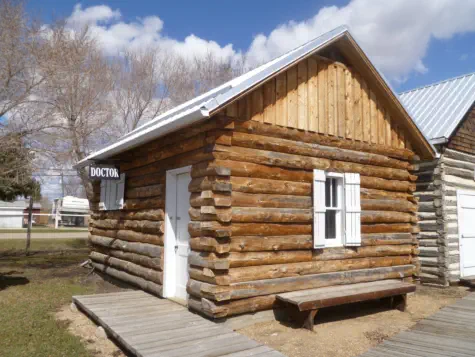
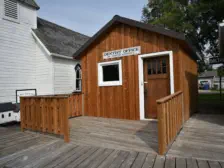
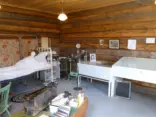
Dr. Shadd’s Doctors Office
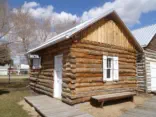
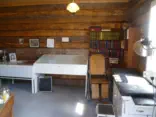
Dr Shadd building (Doctor’s Office) was built in 2013 by Museum Volunteers
to honor Dr Shadd. Medicine in the late 1890s and early 1900s was
considerably different than that practiced today. The few doctors within the
area were responsible for an area that could span hundreds of miles.
House calls were the norm and would frequently involve travelling by
horse, cutter or democrat for great distances in a wide variety of weather.
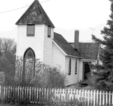
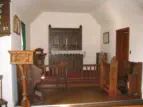
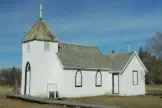
St. Pauls Anglican Church
St. Paul's Anglican Church was central to the community of Meskanaw for
many years. Its history is closely tied that of the founding families of the area.
St. Paul’s Anglican Church was built in 1907 on a site presently occupied by the
Meskanaw cemetery. The first church service was held on April 14th 1907 and
was conducted by Canon Thomas Clarke. The building was consecrated in the
spring of 1909 by Bishop Newnham.
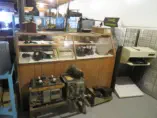
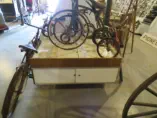
The Exhibit Hall
The Exhibit Hall was originally built on the Agricultural Society grounds in
1906 and was used by the society as its first display hall. In the early 1970's,
the structure served as a forerunner of Melfort’s current museum. For a
number of summers, during the Exhibition, the Exhibit Hall was used to
display a harness shop and a blacksmith shop, as well as a number of
antique travel vehicles and household appliances. The structure was moved
to its present location in 1980. The upper level houses a portion of the
Melfort and District Museum’s artifact collection in storage, while the lower
level serves as a display area. The Exhibit hall underwent a transformation
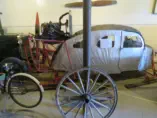
in 2019 the transportation area remained. A Telephone, Bank, Radio/record
player, bike display as well as many other fascinating artifacts are
presented.
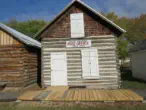
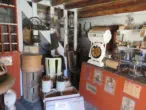
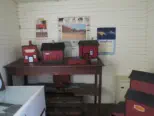
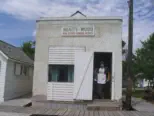
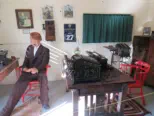
The Melfort Post Office
Both the general store (which began in 1902) and the post office (which
followed in 1903) were an important part of the South Melfort district (now
Resource) in the early 1900s. Although small in size, the post office and general
store were significant in servicing the pioneers living in the area. In the building,
friends and neighbours gathered, warming themselves around the tall Quebec
heater in the winter months.
The Fairy Glen Co-op
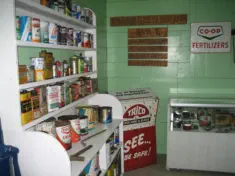
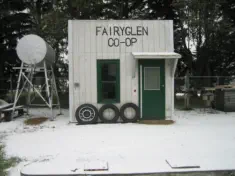
The Fairy Glen Co-op Bulk Fuel was opened about 1940. This small office
building was used, along with a larger warehouse, for the sale of oils,
lubricants, and other bulk products. In the beginning, gasoline was
transported in 45-gallon drums from the Regina refinery by local farmers. It
was then either picked up by area farmers or delivered to them in the same
drums. There were also underground tanks with hand operated pumps for
the retail trade, which were filled from the barrels. A few years later the
switch was made from 45-gallon drums to bulk fuel tankers and tanks.
The Bunk House - Cook House
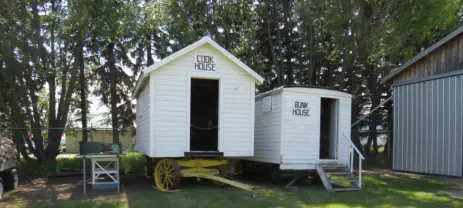
The threshing crew normally moved from farm to farm, since only the largest
and best equipped farms would own such equipment. The cook house and
bunk house, pulled by horses or a tractor, would be moved to new locations
when the threshing machine was moved to a new field. It was a very
demanding but also exciting time for everyone involved. Many pies were
baked, the chickens worked overtime supplying eggs, and gallons of tea and
coffee were consumed. The horses and crew worked long hours hoping to get
the threshing done before winter set in.
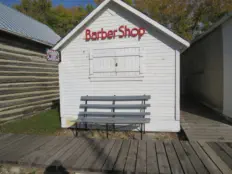
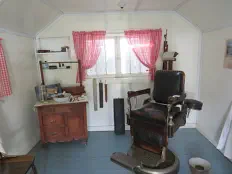
The Barber Shop
Frank Dean was a barber for sixty years of his life, thirty-seven of which were
spent in the barbershop in Melfort. He was an expert at his job and few
complained of a poor cut or shave from this master barber. Even those with
the toughest of beards, which were known as squirrels received a smooth
shave from Frank Dean. Dean (1876-1961) started barbering in Souris,
Manitoba in 1898. From there he spent three years in Brandon, Manitoba. In
1907, he traveled to Hanley, set up a barbershop and at the same time took
out homestead papers on a quarter section of land near Outlook,
Saskatchewan. In 1922 he moved to Melfort, traveling with his family in their
Overland touring car.
The Blacksmith Shop
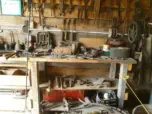
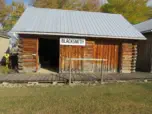
The Melfort and District Museum's Blacksmith Shop was originally located
across from the United Church at 209 Burrows Avenue West and had been
previously used as a barn by John Halvorson. The structure was moved to the
Museum grounds in 1973. Initially a two storey building, the second level was
removed upon its relocation. The style of the structure is similar to that of the
blacksmith shop originally found on the Bennett farm.
The Real Estate Building
The Real Estate and Land Claims Office was originally run by Reginald Beatty
and Robert Wood as a Land Titles and Insurance Office and was located on
the south end of Main Street. Reginald Beatty was the areas first white
settler and a founder of the Stoney Creek Settlement. When the town
moved, he set up his business just north east of the Rail Road Station on the
south side of Saskatchewan Ave. The two men, both of whom played
prominent roles in the development of Melfort, formed a partnership in
1906 with Wood as public notary - a public official or solicitor who
is legally authorized to witness the signing of documents and to perform
other formal transactions - and Beatty as commissionaire.
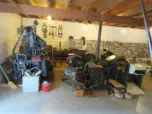
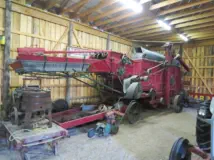
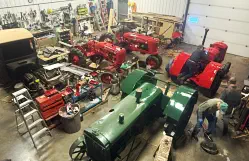
The Machinery Shed
The Machinery Shed was built in 2007, after a fire destroyed the previous
shed housing machinery artifacts at the Museum. Some of the artifacts were
lost in the fire, but several were salvageable, including the Whittome
Snowplows. This shed holds tractors that have been restored or are slated
for restoration. As well in the Machinery shed, we have a large display of
licence plates and motor engines.
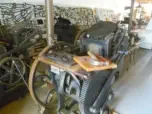
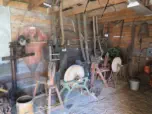
The Grist Mill
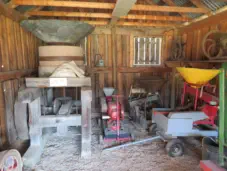
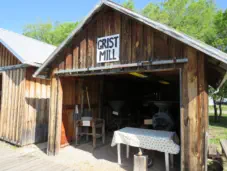
The North shed, situated between the Milk House and Blacksmith Shop,
shelters a number of grinding implements (grist mills) that were used to grind
grain into flour. Mills were often community owned and used. Key to the
success of a good millstone was its dressing. The cut stone faces turned
against each other, crushing the grain and pushing it outward to spill off the
edges of the stones. Patterns generally consisted of grooved lines, the
"furrows," alternated with flat plains, the "field." Because newly milled flour
did not make bread as good as that which was aged, it was important that
one lay in a good stock that could sit approximately ten months before use.
Modern millers are permitted to use improvers/oxidants to age flour rapidly,
but little was known of cereal chemistry during the late 19th century.
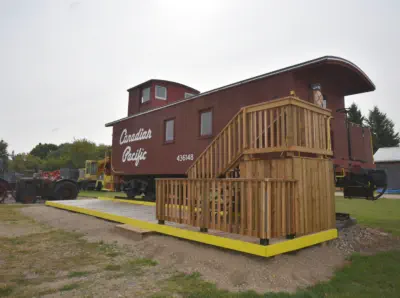
The Caboose
The Melfort & District Museum is home to a fully restored 1912 Canadian
Pacific Railway caboose. Originally used on routes between Prince Albert and
Nipawin, the caboose was later used as a yard caboose before being
donated by the Western Development Museum and acquired by the
museum in 2019. Museum volunteers completed extensive restoration
work on the exterior, interior, and surrounding grounds, finishing the project
in late summer 2026. The restoration used wood and materials consistent
with the caboose’s original construction, helping preserve this important
piece of railway history for visitors to enjoy.




Melfort & District Museum
401 Melfort Street, Melfort SK 306 752 5870
melfort.museum2@sasktel.net
melfort.museum@sasktel.net


The Melfort Museum Settler’s Village features 26
buildings with original artifacts.
You and your family may tour during our summer
season